
Know your role?
In a work place, there are many hazards. It is important that everyone plays their own role in keeping each other safe. This is also known as the "Internal Responsibility System". The following are some examples of responsibilities of each role in a workplace.
Employers:
make sure that required health and safety training is given to you
make sure that you are provided with proper equipment and trained to use it safely
make your supervisors and you aware of any known hazards in the workplace
Supervisors:
make sure that you (the worker) follow the law and the company safety rules
make sure that you work safely and use any required safety equipment
Workers:
comply with the Act, any applicable Regulations and the company health and safety rules;
use all machines and equipment the way you were trained to use them;
How are young workers getting hurt?
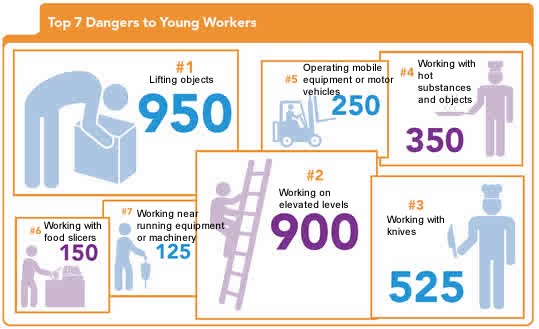
On a daily basis, young workers are injured by slips and falls, objects that hit them and even exposure to hazardous chemicals. The statistics for 1999 alone are frightening.
In 1999, 14 young workers were killed, 12 of them at small employers with less than 20 employees
In 1999, 254 young workers suffered the loss of a body part when it was torn off (avulsion) or cut off (amputation).
Not enough? Here are some even more frightening statistics. The top 3 causes of injury to young workers from 1996-1999 are as follows:
Struck against, struck by an object
Overexertion
Falls
Hazards:
A hazard is anything that can hurt you or make you ill. Young workers deal with hazards everyday, so it is important to know how to properly manage them. The following are the 4 types of workplace hazards, along with examples of each.
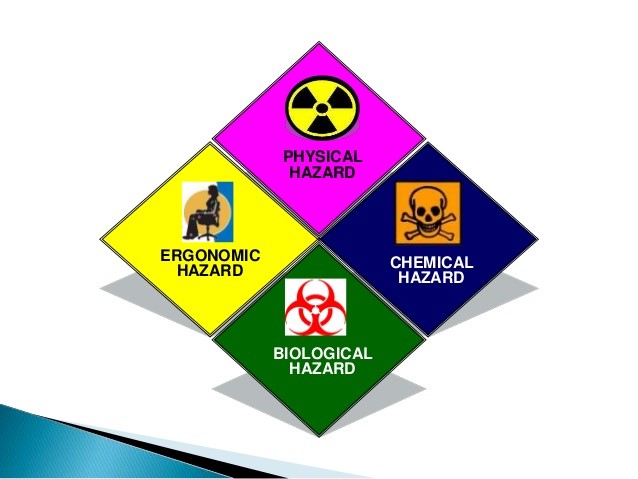
Chemical
- liquids like cleaning products, paints, acids and solvents
Physical
- unguarded moving machinery parts like saw blades and conveyor belts
Biological
- bacteria and viruses
Ergonomic
- constant lifting
Workplace Training:
Anytime you start a new job, your employer and supervisor have a duty to give you information about the hazards in your job and make sure you have any safety training required by law.
There are two type of training you must receive. The first is General workplace safety training, which alerts you to basic safety concerns and procedures in your workplace such as company safety rules, emergency procedures and first aid locations. The second is specific safety training, which teaches you how to do your job safely and how to use any machines required in your job.
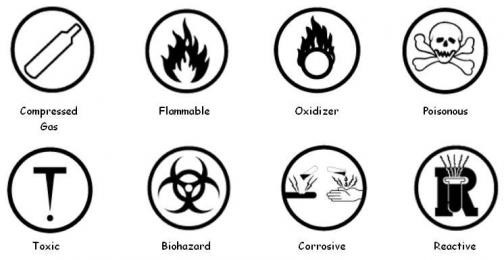
If your job involves working with chemicals, your employer will also have to provide you with a special type of training called WHMIS, which stands for Workplace Hazardous Materials Information System.
PPE - Personal Protective Equipment:
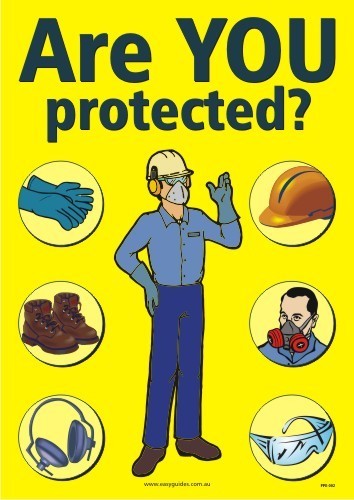
Your employer must ensure you have the protective equipment your job requires, and your supervisor must make sure you use it and that you use it properly.
The type of personal protective equipment you need will depend on the the job you are doing. A few of the most common:
- Hard hats and safety boots are required at all construction sites and may be required in factories.
- Safety glasses and dust masks are required when working on many different types of machine.
Injuries:
Injuries and illnesses are preventable. And a workplace that takes its health and safety duties seriously can reduce exposure to hazards leading to injuries or illnesses. But if something does happen you must always remember to report to a supervisor.
Why don't young workers report injuries?
There are many reasons as to why young workers may not report an injury which occurred at work, such as they are afraid that their employer may get mad. Regardless of this, it is important to always report injuries which occur at work in order to make sure you get correct medical treatment, appropriate compensation for your injury and to make sure that the cause of the injury is investigated and eliminated
Ontario's Workplace Safety and Insurance Act (WSIA)
The WSIA is an important law for occupational health and safety. It was created to promote safe and healthy workplaces, help workers who have been injured or made ill from their work return to their jobs quickly and safely, and to provide compensation benefits while they are off work.
The WSIA is administered by the Workplace Safety and Insurance Board (WSIB).
In all but the most minor cases, you and your employer have a responsibility to report a work-related injury or illness to the WSIB promptly and to file a claim correctly.
